SKI BOOTS / MY GEAR
Fischer RC4 with ZipFit liners
The Fischer setup that got me talking about liners.
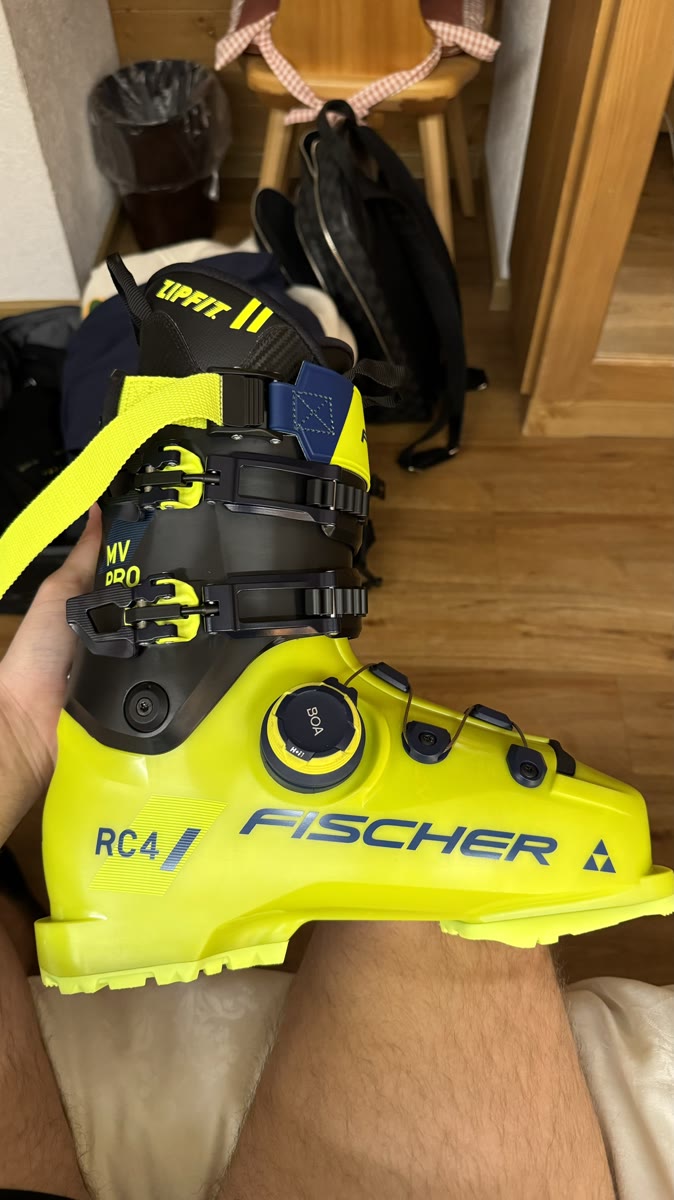
From my MV120s to the RC4 Pro
My Fischer RC4 Pro boots were an upgrade from my Fischer MV120s, and I was genuinely a bit concerned about moving up to the 140 flex. In practice, the number sounded more intimidating than the boot felt. In my long-term review I explained that the flex pattern was actually nicer to use than I had expected. That was the surprise: more performance did not automatically mean a boot I had to fight all day.
These are the yellow Fischers in my photos, and I rate the complete setup enormously. I want to explain the shell and liner together because the liner is a big part of why this particular pair worked so well for me.
The ZipFit is the starting point
The first thing I talked about in the film was the ZipFit liner. Fischer and ZipFit are separate companies, and my RC4 Pro came with the liner included. At the time I recorded the review, I put the standalone liner cost at roughly £400–£500. That was my price comparison then, rather than a current quote, but it explains why I thought the complete boot represented good value despite being expensive.
The liner uses a cork-based filling around key areas of the foot. What mattered to me was the result: secure heel hold, comfort and a feeling that my foot was connected to the ski. In the original review I described my experience as “zero heel lift, zero pressure points”. That is how my fitted pair felt; it is not a promise that another person can buy the same size and get the same result.
How the 140 flex felt on snow
I described the RC4 Pro as precise and very responsive to my inputs. I could feel the turn, the edge and the carve, and that connection was the reason the upgrade impressed me. I had been worried about stiffness, yet the way the boot flexed was one of the things I ended up praising.
I also mentioned ankle movement in the film. A flex number on its own does not tell you how you will stand or move in a boot. It is worth watching my later fitting with Tim alongside this review, because it puts that point into a real fitting rather than leaving it as a number on a box.
Warmth and a fit that can be maintained
I was impressed by the warmth of the liner, including the toe area. More importantly, I liked that the fit could continue to be adjusted. In the film I showed how the cork filling can be topped up through the liner’s filling points. That gives a fitter something to work with as your requirements change.
I have since talked separately about my medium-volume and low-volume Fischer ZipFit liners. They are not interchangeable choices just because they carry the same brand. The space inside the shell matters, which is why each has its own review linked below.
What I thought of the build
I praised the buckles, shell design and overall finish in the original review. The RC4 Pro felt like a serious piece of equipment, and I thought the construction matched the performance I was getting from it. I was enthusiastic about both comfort and control, rather than treating them as a trade-off.
My strongest conclusion was about the liner: after this experience I said I could not imagine going back to skiing without a ZipFit. That is why I keep returning to liners in my boot content, even when the conversation starts with a particular shell.
My verdict
For me, the RC4 Pro with ZipFit was an excellent upgrade from the MV120. The responsive feel, the manageable flex pattern and the way the liner held my foot were the things that made it stand out. I love this setup.
If you are considering it, watch the original long-term review below and take the whole setup to a fitter: shell, liner, footbed and socks. My recommendation is based on the pair I used. The goal is to find that same confidence and comfort for your own feet, rather than simply copying my 140-flex label.
More from my kit
Tim’s advice ↗
“I’m going to mark this spot because I want to be pretty precise on what we need to do.”
Tim marks the pressure point before modifying the shell. If you’re trying a different liner, tell your fitter exactly where the pressure shows up so they can check the liner and shell together.